

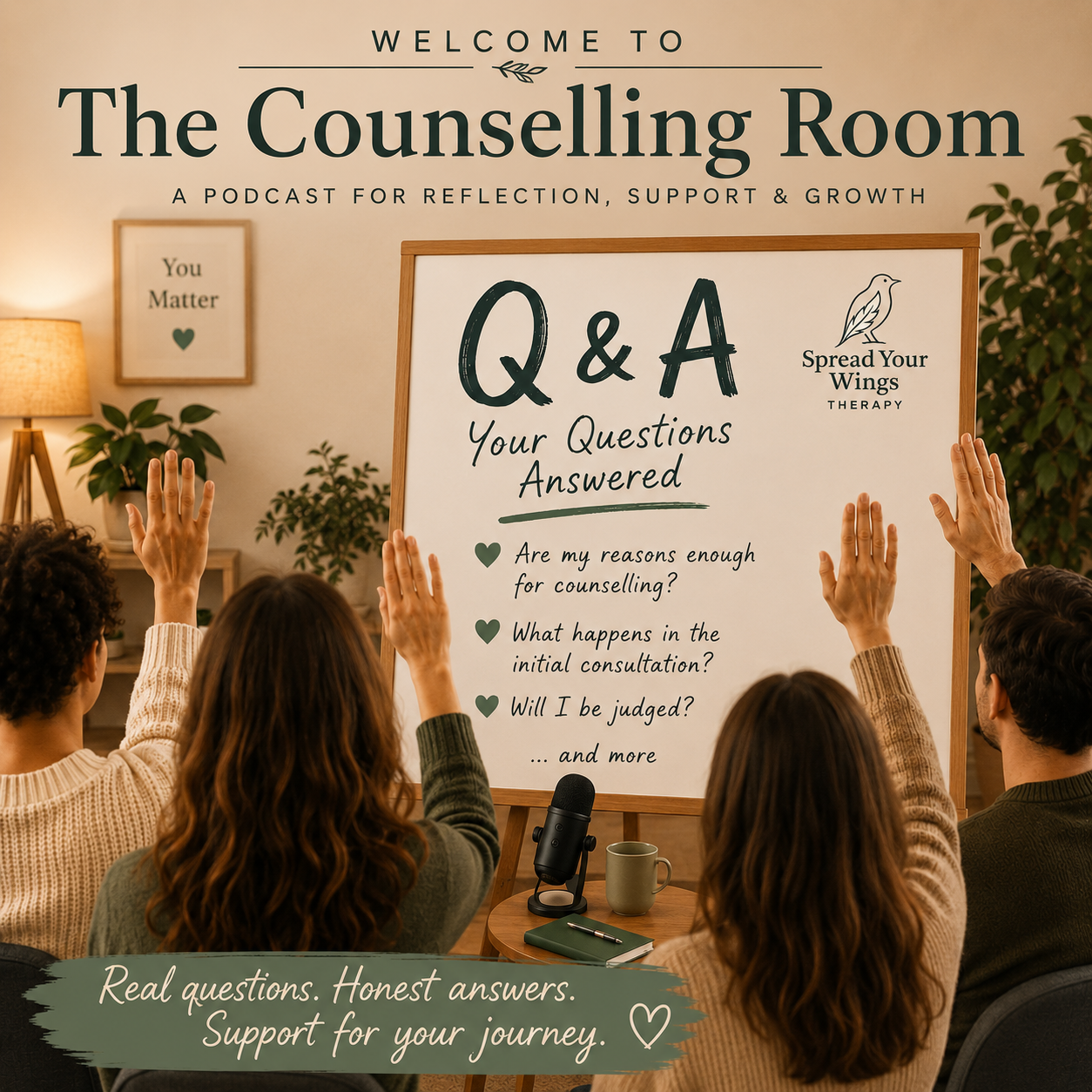
Q & A: Your Questions Answered
Choosing the Right Counsellor: Common Questions Answered
Making the decision to seek counselling can be a significant step. Alongside feelings of hope and determination, many people also experience uncertainty, vulnerability, and anxiety about sharing personal thoughts and feelings with someone they have never met before.
Once you begin searching for a counsellor, you may find yourself faced with hundreds of profiles, different qualifications, counselling approaches, and unfamiliar terminology. It’s no surprise that many people feel overwhelmed before they’ve even booked an appointment.
This blog aims to answer some of the most common questions people ask when considering counselling and to help make the process feel a little less confusing.
What Is an Initial Consultation?
An initial consultation is simply an opportunity for you and a counsellor to have a conversation.
During this meeting you can discuss:
- Your reasons for seeking counselling
- How the counsellor may be able to support you
- Any questions or concerns you have
- Whether you feel comfortable working together
Many people feel nervous before an initial consultation, and counsellors understand this. You don’t need to have all the answers or know exactly what to say. Equally, there is no obligation to begin counselling afterwards. The decision is always yours.
Are My Reasons Enough for Counselling?
If something is affecting your wellbeing, daily life, relationships, confidence, or ability to cope, then your reasons are valid.
There is no requirement for your difficulties to reach a particular level before seeking support. Many people access counselling because they simply want a safe space to understand themselves better.
What If I Don’t Know What’s Wrong?
This is one of the most common concerns people have.
Many clients arrive feeling confused, overwhelmed, or unable to explain exactly what is troubling them. Counselling isn’t about having the right words. Often, understanding develops through the process of talking and exploring your experiences with someone who listens without judgement.
Can I Bring More Than One Problem?
Absolutely.
Life rarely presents us with a single issue in isolation. Someone may initially seek support for grief, anxiety, or relationship difficulties but discover that other experiences are connected too.
Counselling provides space to explore the whole picture rather than focusing on only one concern.
Do I Have to Tell My Counsellor Everything?
No.
You remain in control of what you choose to share. Trust takes time to build, and it is perfectly acceptable to say:
- “I’m not ready to talk about that.”
- “Can we come back to that another time?”
- “I’d rather focus on something else today.”
Counselling should never feel pressured or forced.
How Do I Know My Information Is Safe?
Counsellors collect certain personal details for professional and safety reasons and should explain how your information is stored and protected.
Confidentiality is a key part of counselling, although there are some important exceptions where there may be concerns about safety. Your counsellor should explain these clearly before sessions begin.
What If I’m Worried About Being Judged?
Many people worry about this before counselling.
A counsellor’s role is not to judge, criticise, or tell you how to live your life. The counselling relationship is built upon empathy, understanding, acceptance, and respect.
If you feel judged or uncomfortable, it is important to discuss this or consider whether that counsellor is the right fit for you.
What Is a Counselling Modality?
A modality simply refers to the way a counsellor works.
For example, I work using a person-centred approach. This means sessions are led by you and your experiences, while I provide a supportive space to help you explore your thoughts and feelings.
Different modalities work in different ways, and most counsellors are happy to explain their approach if you are unsure.
What Is Expected of Me?
Very little.
You do not need to prepare, perform, or have all the answers. The most important thing is that you attend because you want to be there and feel ready to engage with the process.
Counselling works best when it is your decision.
What If I Don’t Like My Counsellor?
Not every counsellor will be the right fit for every client.
This isn’t a failure on either side; it’s simply part of finding the right professional relationship. If you feel uncomfortable, unsupported, or unable to connect with a counsellor, you are free to end sessions and seek support elsewhere.
Finding the right counsellor is important, and you deserve to work with someone who meets your needs.
Looking After Yourself Between Sessions
Counselling can sometimes bring strong emotions to the surface. It’s common to feel reflective, tired, emotional, or distracted after a session.
Giving yourself some quiet time afterwards, where possible, can help you process what has been discussed.
A Final Thought
Finding the right counsellor can sometimes feel like a long and confusing process, but it is often worth the effort.
The relationship between counsellor and client is an important part of the therapeutic journey. Taking time to find someone who feels right for you can help create a safe space for growth, understanding, and change.
Whatever brings you to counselling, remember that you don’t need to have all the answers
before you begin. Sometimes the first step is simply allowing yourself to ask for support.